

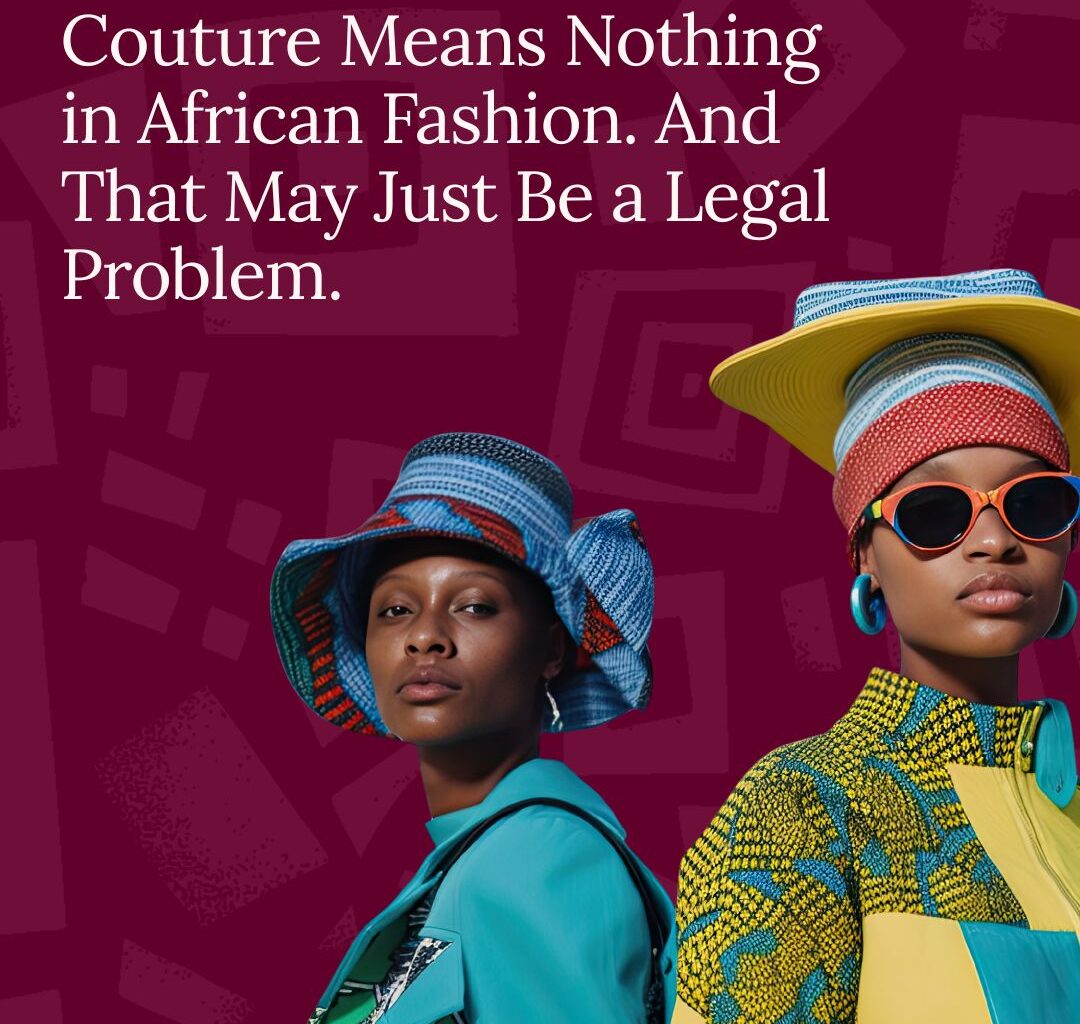

The word has become a synonym for expensive, for custom, for aspirational attached to everything and therefore meaning nothing.
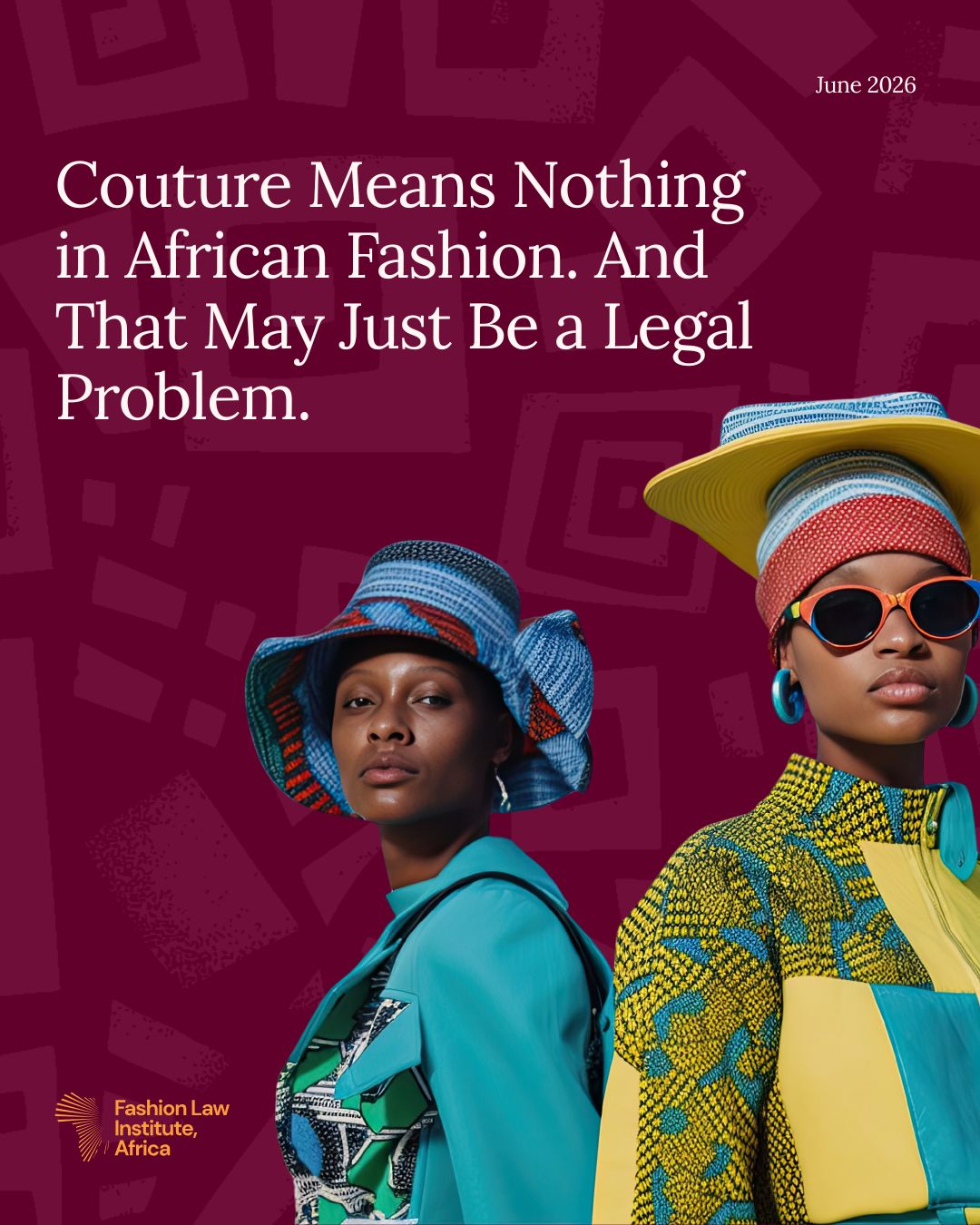
Walk through any African fashion market, scroll through any Nigerian designer’s Instagram, browse any Ghanaian brand’s website and you will find the word couture everywhere. Couture bridal. Couture ready-to-wear. Bespoke couture. Luxury couture. The word has become a synonym for expensive, for custom, for aspirational attached to everything and therefore meaning nothing. And that linguistic inflation is not just a semantic inconvenience. It is a commercial and legal problem that the African fashion industry has not yet reckoned with seriously.
What the Law Says
The Global Position
In its original and legally protected form, haute couture is one of the most tightly defined designations in global fashion. The Chambre Syndicale de la Haute Couture in Paris governs who can use the term, what criteria must be met, how many fittings are required, how many workers must be employed in the atelier, and how collections must be presented. The designation is protected by French law and enforced by a body with nearly a century and a half of institutional authority behind it.
A brand that calls itself Haute Couture without meeting those criteria in France is making a false claim that carries legal consequences, it is not a style choice, it is a regulated designation and the law treats it as such.
The legal architecture behind the Parisian system exists because the designation creates commercial value and that value requires protection.When consumers pay couture prices they are paying for a specific promise — made-to-measure, hand-crafted, fitted to their body, produced in an atelier that meets defined standards. The law protects that promise because without protection the word becomes meaningless and the commercial premium it commands evaporates
What the Law Says
The African Position
In Nigeria, in Ghana, in South Africa, in Kenya, couture is entirely unregulated. Any brand can call itself couture. Any dress can be described as couture. Any price point can be justified by the word. There is no African equivalent of the Chambre Syndicale. There is no body with the authority to define, certify, or enforce what the word means in an African context. The word sits in a complete legal vacuum and that vacuum has two specific legal consequences that the industry has not yet named.
Two legal problems sit at the heart of this.
The first is consumer protection. Nigeria’s Federal Competition and Consumer Protection Act, Ghana’s Consumer Protection Act, and South Africa’s Consumer Protection Act all prohibit misleading representations about the quality or standard of goods. A brand using the word couture to imply a level of craftsmanship the product does not meet is potentially making a false commercial representation under frameworks that already exist. No consumer protection authority has pursued this in a fashion context yet but the legal basis is there and as African consumer markets mature it moves from theoretical to live.
The second is brand dilution. A designer who has genuinely invested in couture-level production cannot protect the word couture through trademark law because it is a generic descriptive term. Their premium positioning is therefore constantly eroded by brands using the same language to describe a fundamentally different product and the law offers no remedy because no African institutional framework exists to define what couture means or certify who has earned the right to use it.
We Advise Both Sides: Models and Agencies
Unlike some legal practices that limit their representation to one side of the model-agency relationship, Cardinal Counsel advises both models and agencies, as well as the brands that engage them. This means we understand how disputes look from every angle, and we use that understanding to give better, more practical advice to whichever party we are acting for.
If you are a model, we can review your contract before you sign it, advise you on your rights during the term of the agreement, and represent you if the agency breaches its obligations to you.
If you are an agency, we can draft and review your model contracts, advise you when a model fails to perform or walks off a confirmed booking, and represent you in recovering your losses.
If you are a brand, we can advise on your booking agreement, help you recover a deposit paid for services not rendered, and represent you if an agency or model has breached its obligations to you.
The honest legal position is this.
The law as it currently stands in African jurisdictions does not prohibit the use of the word couture by fashion brands. It does not define what the word means in a fashion context. It does not certify brands that meet a premium standard or protect those brands from dilution by brands that do not. Consumer protection law provides a theoretical basis for challenging false quality claims but has never been applied in this context. Trademark law protects brand names but not generic descriptive terms. The word couture, used in a fashion context, describes a type or quality of garment. It is descriptive. No single brand can own it and no trademark registration will prevent a competitor from using it to describe their own products.
The African fashion industry needs to have an honest conversation about what it means legally and commercially to be a premium brand, a luxury brand, and a craft brand and to build the institutional frameworks that define and protect those distinctions. Until it does the word couture will continue to mean everything and protect nothing and the designers who have genuinely earned the right to premium positioning will continue to carry a label that the market no longer trusts.
What African fashion brands that are genuinely operating at premium craft levels need is not the word couture. They need the infrastructure that the word is supposed to signify documented provenance, protected intellectual property, a brand story rooted in specific and named craft traditions, a pricing strategy that reflects actual value, and the legal architecture that prevents their work from being copied and undercut. That infrastructure is worth more than any label and it travels internationally in a way that a borrowed word never will.