


Part of the State of Fashion Law & Policy in Africa 2026 | Southern Africa
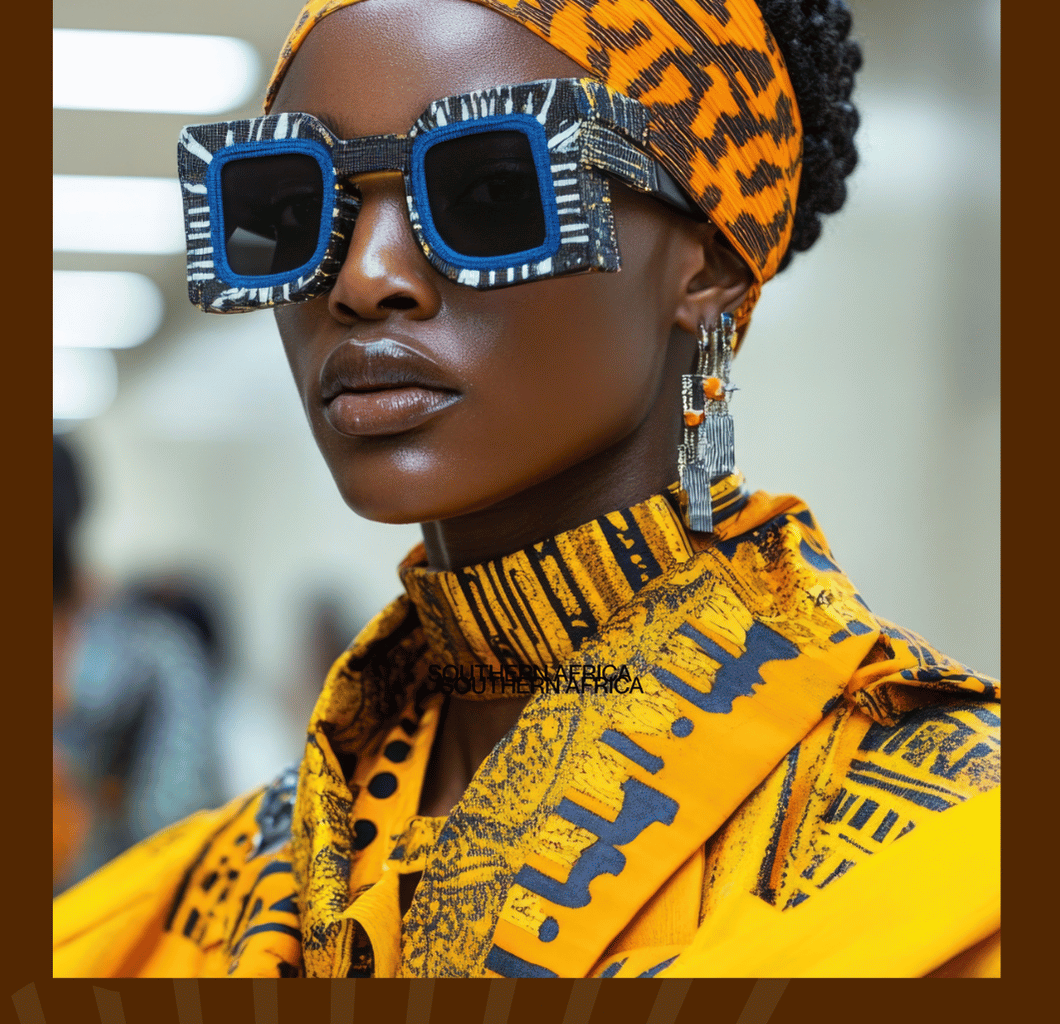
South Africa’s fashion industry is the most formally institutionalised on the continent. Johannesburg and Cape Town anchor an ecosystem of luxury labels, mass-market retail, garment manufacturing and an established fashion week circuit. The South African Fashion Council engages directly with government on trade and IP policy. Yet the legal framework has significant gaps: cultural heritage protection exists on paper but not yet in practice, copyright reform remains unfinished, and informal garment workers remain structurally underprotected. This chapter of the Fashion Law Institute, Africa’s annual flagship report examines fashion law in South Africa across intellectual property, counterfeiting, business and labour law, cultural heritage and sustainability.

Design Protection: A Powerful but Underused Tool
The Designs Act 195 of 1993 protects registered aesthetic designs for up to 15 years, and functional designs for up to 10. Aesthetic registration directly protects the visual appearance of garments, accessories and footwear, yet it is dramatically underused by South African designers.
Recent case law shows what designers are missing. In Balser Jan Nienhuis v Africo Solar (Pty) Ltd [2025] ZAWCHC 205, a registered design owner obtained an interdict, a destruction order and an inquiry into damages against a company selling identical copies of his products. The lesson for fashion is clear: designers who register can act decisively against copyists.
Copyright and Trademarks
The Copyright Act 98 of 1978 automatically protects original fashion designs, fabric patterns and illustrations. Reform remains unfinished. The Copyright Amendment Bill was referred to the Constitutional Court, which ruled in June 2026. The Court struck down the Bill’s education exception but upheld most other contested provisions. The Bill cannot be enacted until Parliament responds, so questions around AI-generated designs and platform liability remain open.
Trademarks are registered with CIPC under the Trade Marks Act 194 of 1993. Registration is not absolute protection. In LA Group (Pty) Ltd v Stable Brands (Pty) Ltd [2022] ZASCA 20, the Supreme Court of Appeal confirmed that owners must actively use their marks or risk cancellation.
Parallel Imports: The Barel Ruling
In Yossi Barel v Popular Trading CC [2025] ZASCA 94, a 3–2 majority of the Supreme Court of Appeal held that genuine branded goods imported without the local trademark holder’s permission are not counterfeits under the Counterfeit Goods Act, because counterfeiting requires an intention to deceive. The ruling draws a clear line between counterfeiting and ordinary trademark infringement. It matters for every fashion business that imports, distributes or enforces branded products in South Africa.
Counterfeiting and Dupe Culture
South Africa’s porous borders and constrained enforcement capacity allow large volumes of counterfeit fashion goods to enter the country, often through illegal transhipment via neighbouring states. Enforcement depends almost entirely on rights holders, which puts it beyond the reach of many small brands.
Consumer attitudes compound the problem. “Dupe culture”, in which shoppers actively seek out and celebrate lookalikes of premium designs, has normalised buying imitations and steadily eroded the brand equity of homegrown labels.
Customs enforcement has, however, been strengthened. In Commissioner for SARS v Dragon Freight [2022] ZASCA 84, the Supreme Court of Appeal upheld the seizure of 19 containers of under-declared clothing and textiles.
Cultural Heritage: Protection on Paper Only
South Africa has passed two laws to protect cultural heritage, and neither is yet in force:
- The Intellectual Property Laws Amendment Act 28 of 2013 would protect indigenous designs and require community consent and benefit-sharing, but it has never been brought into force.
- The Indigenous Knowledge Act 6 of 2019 would let communities register their knowledge and license its commercial use. It was signed into law in 2019, but its commencement has not been proclaimed and its regulations are still in draft.
Ndebele beadwork, Zulu weaving, Xhosa textile traditions and Sotho blanket design therefore remain unprotected in practice, and no Geographical Indications have been registered for South African textiles. The country’s best-known appropriation dispute came in April 2018, when Zara withdrew socks resembling MaXhosa Africa’s Xhosa-inspired designs after public outcry and legal letters. That case showed how powerful cultural IP claims can be, even outside court.
Business, Labour and Sustainability
- Business: Fashion businesses operate under the Companies Act 71 of 2008.
- Consumers: The Consumer Protection Act 68 of 2008 gives consumers strong rights to quality goods and product information.
- Support programmes: The Department of Trade, Industry and Competition supports the sector through the Clothing and Textiles Competitiveness Programme, the Black Industrialists Scheme, TREP and co-operative development support, though access remains complex for micro-enterprises.
- Labour: South Africa’s labour laws are among Africa’s most comprehensive, but informal garment workers and freelance fashion professionals largely fall outside their protection.
- Sustainability: There is no fashion-specific sustainability law and no eco-labelling standard for the sector.
Recommendations for Fashion Law Reform in South Africa
The report recommends:
- finalising copyright reform in line with the Constitutional Court’s 2026 judgment
- funding IP registration and enforcement support for fashion SMEs
- strengthening border enforcement against counterfeits
- bringing the IP Laws Amendment Act into force and commencing the Indigenous Knowledge Act
- registering Geographical Indications for traditional textiles
- extending labour protection to informal and gig-economy fashion workers
- issuing fashion-specific sustainability guidance under the Extended Producer Responsibility framework
- establishing a fashion sector coordination mechanism within the DTIC
Download the full South Africa chapter
Frequently Asked Questions
How do I protect a fashion design in South Africa?
Original design drawings and fabric patterns are protected automatically by copyright. The strongest protection for a garment’s appearance comes from registering an aesthetic design with CIPC under the Designs Act, which lasts up to 15 years if annual renewal fees are paid.
Are parallel imports of designer goods counterfeit in South Africa?
No. In 2025, the Supreme Court of Appeal held in Barel v Popular Trading that genuine goods imported without the local trademark holder’s permission are not counterfeits, because counterfeiting requires an intention to deceive. Whether such imports infringe a trademark is a separate question.
Can South African communities stop brands using their traditional designs?
Not yet in practice. Two laws, the IP Laws Amendment Act 2013 and the Indigenous Knowledge Act 2019, would give communities rights over their heritage, but neither is yet in force. Communities can still rely on public pressure and, in some cases, passing off.
Is South Africa’s Copyright Amendment Bill law?
No. The Constitutional Court ruled on the Bill in June 2026, striking down its education exception but upholding most other contested provisions. The Bill cannot become law until Parliament addresses the Court’s findings.
Do I need to use my trademark to keep it?
Yes. Registered trademarks that are not used can be cancelled, as the Supreme Court of Appeal confirmed in LA Group v Stable Brands (2022).
About the Contributors
This chapter was written by Mpoetsi Regina Mohale, LLB candidate at UNISA and Legal Intern at Mdakane Attorneys Inc, and Mandisa Nzimande, founder of MN Attorneys and FLI Africa Country Representative for South Africa.
Read other chapters of the State of Fashion Law & Policy in Africa 2026, including Nigeria, Kenya, Uganda, North Africa and the Francophone OAPI zone.