



Part of the State of Fashion Law & Policy in Africa 2026 | East Africa
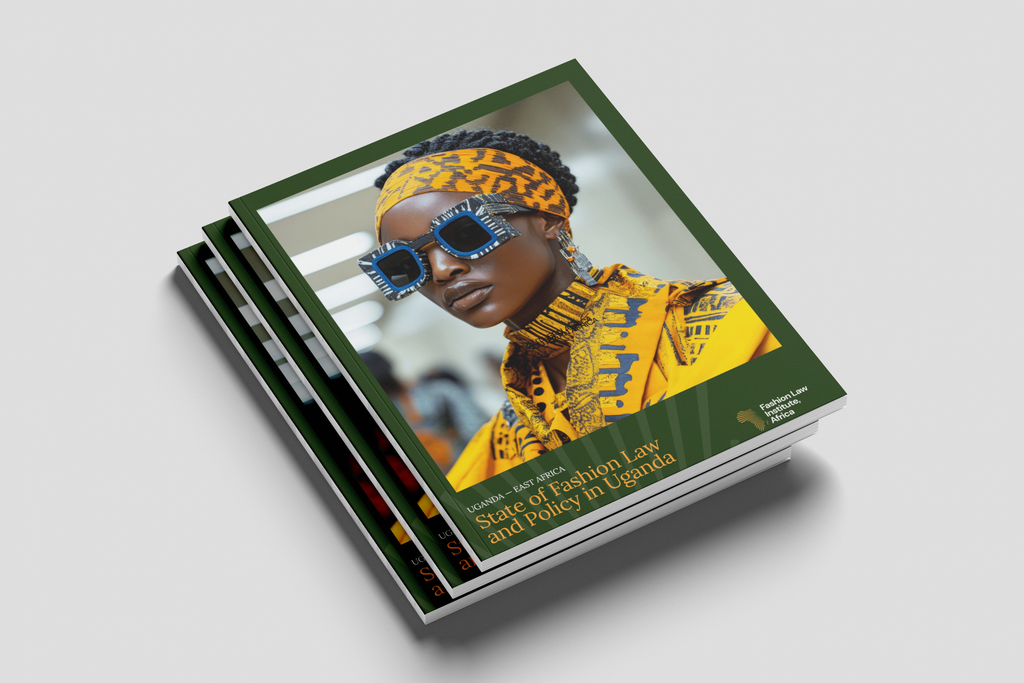
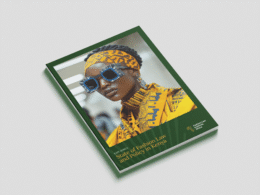
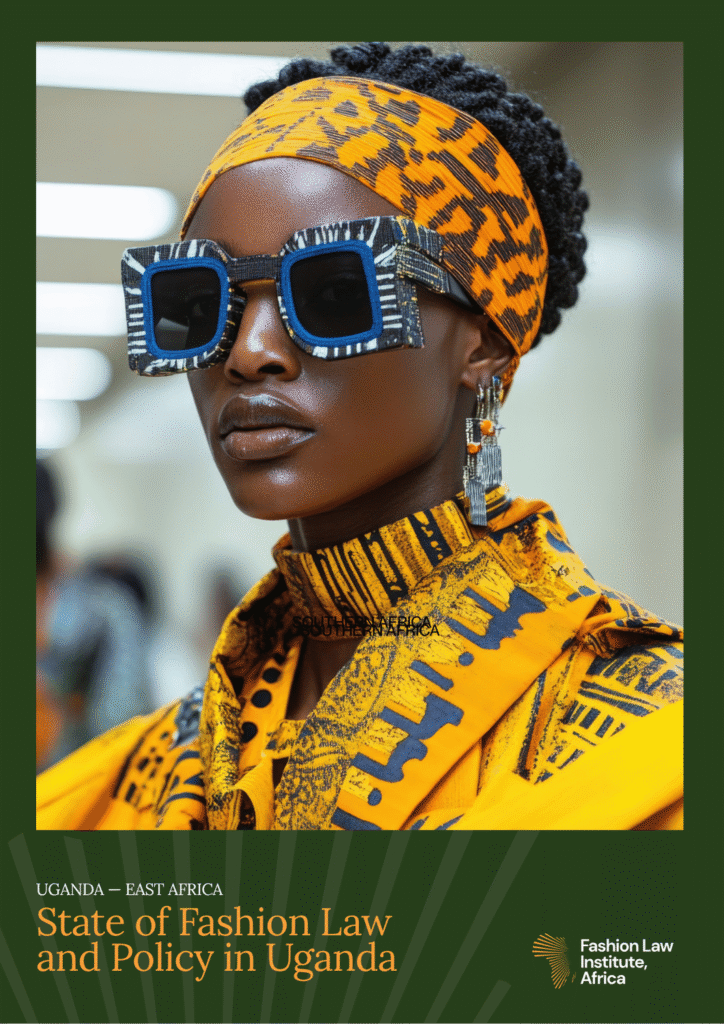
Uganda’s fashion sector combines extraordinary textile heritage with a fast-growing community of SME designers. It also sits within one of the most active IP reform programmes on the continent. Between 2024 and 2026, Uganda passed a major copyright reform, ratified the WIPO GRATK Treaty, modernised its registration systems, and produced a series of trademark rulings with direct lessons for fashion brands.
This chapter of the Fashion Law Institute, Africa’s annual flagship report examines fashion law in Uganda across intellectual property, business and tax, consumer protection, sustainability and labour, digital fashion, cross-border trade, cultural heritage and dispute resolution. Two structural realities shape the analysis: most of the sector operates informally, and Uganda’s traditional textile heritage remains only partly protected by law.
Copyright Protection for Fashion Designs in Uganda
The Copyright and Neighbouring Rights Act, Cap 222, automatically protects original textile patterns, garment sketches and fashion illustrations for the author’s lifetime plus 50 years. In March 2026, Parliament passed the Copyright and Neighbouring Rights (Amendment) Bill 2025, which has since been signed into law. The reform introduces:
- penalties of up to UGX 50 million and 10 years’ imprisonment
- protection against circumvention of digital locks
- notice-and-takedown obligations for online platforms
- stronger rules on royalties
Most importantly for fashion, copyright assignments and licences must now be in writing. Every commissioned print, illustrator collaboration and manufacturing licence should be formalised in a signed contract.
Trademark Protection: Lessons from ZARA and Aquelle
Brands register trademarks with the Uganda Registration Services Bureau (URSB) under the Trademarks Act, Cap 225, for renewable 10-year terms. Two recent URSB rulings show how firmly Uganda applies its registration-based system:
- In Industria de Diseño Textil, S.A. v Zeregaber General Trading (U) Limited [2025] UGRSB 40, ZARA failed to stop a local company registering “ZARA GARDEN HOTEL AND APARTMENTS”. The tribunal held that international fame gives no protection across unrelated sectors, and that well-known mark status in Uganda requires defensive registration under section 47 of the Trademarks Act.
- In Credscan (Proprietary) Limited v Aquelle Beverages SMC Limited [2026] UGRSB 1, a foreign brand that had used its mark internationally since 1998 failed to cancel a Ugandan registration of the same name. Uganda is a first-to-file jurisdiction, trademark rights are territorial, and local goodwill requires actual Ugandan customers.
For fashion brands, the lesson is simple: register in Uganda before entering the market.
Counterfeiting and IP Enforcement
URSB’s enforcement unit works with police and customs against counterfeit goods. However, Uganda still has no dedicated anti-counterfeiting statute, because the Anti-Counterfeit Goods and Services Bill has not yet been enacted. The URSB Strategic Plan IV estimates that piracy costs Uganda’s creative sectors UGX 500 billion a year.
The courts have signalled that infringement is costly. In Konshens v Airtel, the High Court awarded USD 180,000 in general damages plus exemplary damages against companies that distributed copyright works without authorisation, holding that failure to verify rights is no defence. The decision is under appeal.
Protecting Bark Cloth and Traditional Textiles
Bark cloth (olubugo) of the Buganda Kingdom was proclaimed a Masterpiece of the Oral and Intangible Heritage of Humanity by UNESCO in 2005. That recognition is cultural, not legal. URSB has now begun registering bark cloth as a geographical indication with the Ngonge Clan producers in Bweza, but no Ugandan textile yet has a registered GI.
Uganda ratified the WIPO GRATK Treaty in August 2025. However, it still has no dedicated legislation protecting traditional cultural expressions from commercial appropriation.
Business, Tax and Consumer Protection
Fashion businesses register online with URSB and obtain a tax identification number from the Uganda Revenue Authority. Corporate income tax is 30%, and VAT registration applies above an annual turnover of UGX 150 million.
Uganda still lacks a comprehensive consumer protection statute, and the Consumer Protection Bill remains pending. As a result, common fashion retail problems have no clear remedy, including inaccurate sizing, undisclosed fabric content, poor-quality online goods and undelivered pre-orders.
Data Protection and Digital Fashion
In Ssekamwa Frank & 3 Others v Google LLC (July 2025), the Personal Data Protection Office held that foreign platforms processing Ugandans’ personal data must register and comply with Uganda’s data protection law, wherever they are based. Google withdrew its appeal and committed to comply. This applies equally to global fashion e-commerce platforms. Uganda has no specific rules yet on influencer disclosure, NFTs, digital wearables or AI-generated designs.
Labour, Sustainability and Trade
- Minimum wage: UGX 6,000 per month, unchanged since 1984. The chapter describes this as a critical labour rights failure for textile and garment workers.
- Sustainability: There is no fashion-specific sustainability law. Obligations come from environmental impact assessment requirements and the 2024 waste regulations, which introduce extended producer responsibility for textile waste.
- Trade: Uganda trades within the EAC and COMESA and under AfCFTA. AGOA’s current extension expires in December 2026, which could expose Ugandan apparel to US tariffs of 9–32%.
Recommendations for Fashion Law Reform in Uganda
The report recommends that Uganda:
- enact the Anti-Counterfeit Goods and Services Bill
- implement the 2026 copyright amendments with fashion-relevant takedown procedures and licensing guidance
- expand URSB registration services to rural artisans
- complete the bark cloth GI registration and extend GI protection to other textile traditions
- enact legislation on traditional cultural expressions
- pass the Consumer Protection Bill with fashion-specific provisions
- regulate digital fashion and AI-generated design
- update the minimum wage for textile workers
- develop a post-AGOA trade diversification strategy
Download the full Uganda chapter
Frequently Asked Questions
Are fashion designs protected by copyright in Uganda?
Yes. Original textile patterns, sketches and fashion illustrations are protected automatically under the Copyright and Neighbouring Rights Act, Cap 222, for the author’s lifetime plus 50 years. Following the 2026 amendments, any assignment or licence of copyright must be in writing.
Can an international fashion brand stop a local company using its name in Uganda?
Not on international reputation alone. Uganda is a first-to-file jurisdiction, and URSB has held that foreign brands need local registration, or defensive registration under section 47 of the Trademarks Act, to claim well-known mark protection.
Is bark cloth legally protected in Uganda?
Not yet as a geographical indication. URSB has begun the GI registration process with bark cloth producers, but registration has not been granted. Bark cloth’s UNESCO recognition is cultural rather than legal protection.
Does Uganda have a consumer protection law?
Not a comprehensive one. The Consumer Protection Bill is still pending, so consumer rights currently depend on sectoral laws such as the Electronic Transactions Act and the Contracts Act.
Do foreign fashion e-commerce platforms need to comply with Uganda’s data protection law?
Yes. The Personal Data Protection Office held in 2025 that any entity processing Ugandans’ personal data must comply with the Data Protection and Privacy Act, Cap 97, regardless of where it is based.
About the Contributors
This chapter was written by Robert Byaruhanga, fashion lawyer and Research and Policy Associate at FLI Africa, and Hilda Wamono, FLI Africa Country Representative for Uganda and founder of IP Aware Africa.
Read other chapters of the State of Fashion Law & Policy in Africa 2026, including Nigeria, Kenya, South Africa, North Africa and the Francophone OAPI zone.